HBOT for Crush Injuries
When Trauma Cuts Off the Oxygen Your Tissue Needs to Survive
Crush injuries often occur suddenly and without warning. Heavy equipment, vehicle collisions, building collapses, falls, and other traumatic events can trap or compress part of the body with significant force. This can severely restrict blood flow, causing tissue damage to begin within minutes. The longer that compression continues, the deeper the damage goes.
What makes crush injuries particularly dangerous is not just the initial trauma. It is what happens next.
At Andrea Hyperbaric Wound Care and Health Center, HBOT (Hyperbaric Oxygen Therapy) is available as part of the treatment approach for crush injuries. Used alongside surgery and other medical care, it helps restore oxygen to damaged tissue before the window for recovery closes.


Why Crush Injuries Are So Damaging
When a part of the body is compressed under extreme force, blood flow stops reaching the affected area. Without circulation, tissue cells begin to starve for oxygen. The longer that deprivation continues, the more tissue dies, and the more dangerous byproducts get released into the body.
One of the most serious complications is called rhabdomyolysis. When muscle tissue dies from oxygen deprivation, it releases a protein called myoglobin into the bloodstream. Myoglobin travels to the kidneys, where it causes damage that can progress to kidney failure. Cardiac arrhythmias, respiratory damage, and liver problems may also occur.
There is also the risk of compartment syndrome, where dangerous swelling builds up inside the muscle compartments and cuts off blood flow entirely, compounding the original injury.
What makes crush injuries so serious:
- Blood flow stops reaching compressed tissue within minutes
- Dying cells release toxins that travel through the bloodstream when pressure is relieved
- Myoglobin released from damaged muscle can cause kidney failure
- Compartment syndrome can develop rapidly from internal swelling
- Delayed treatment significantly increases the risk of permanent damage or amputation
What Hyperbaric Oxygen Therapy Does
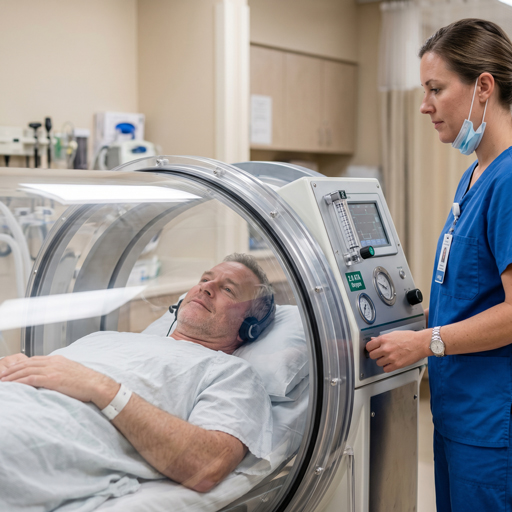
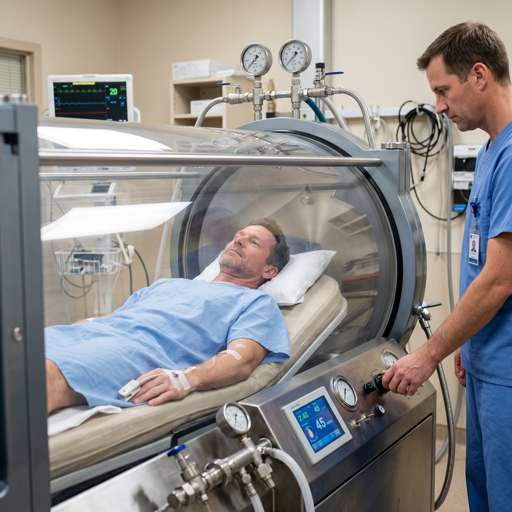
Inside a pressurized hyperbaric chamber, patients breathe 100% pure oxygen. Under elevated atmospheric pressure, oxygen dissolves directly into the plasma, reaching tissue even where blood vessels are too damaged or compressed to carry it normally.
That oxygen delivery changes what is possible for crushed, ischemic tissue.
What HBOT delivers for crush injuries:
- Provides damaged tissue with oxygen that cannot reach it through normal circulation
- Reduces dangerous swelling by constricting leaky blood vessels without cutting off oxygen delivery
- Prevents reperfusion injury when blood flow is restored to oxygen-deprived tissue
- Inhibits bacterial growth in open or traumatic wounds
- Promotes new blood vessel formation to support long-term tissue recovery
- Reduces the extent of tissue loss and lowers amputation risk
Early initiation of HBOT is associated with better clinical outcomes. Starting HBOT early after a crush injury produces significantly better outcomes than beginning treatment after tissue damage has already spread.
Who Can Benefit From HBOT?
Crush injuries vary widely in severity. HBOT is most relevant for:
- patients with significant compression injuries involving compromised circulation,
- those at risk of compartment syndrome,
- patients who have undergone surgical debridement and need additional tissue support, and
- Anyone facing possible amputation due to tissue loss.
Coverage through many major health insurers, including Medicare, is available for approved cases.
Get Evaluated as Soon as Possible
With crush injuries, time is critical. Every hour that oxygen-deprived tissue remains without treatment reduces the opportunity for optimal recovery. If you or someone you know has sustained a crush injury, contact us at Andrea Hyperbaric Wound Care and Health Center today.