









Morton's Neuroma
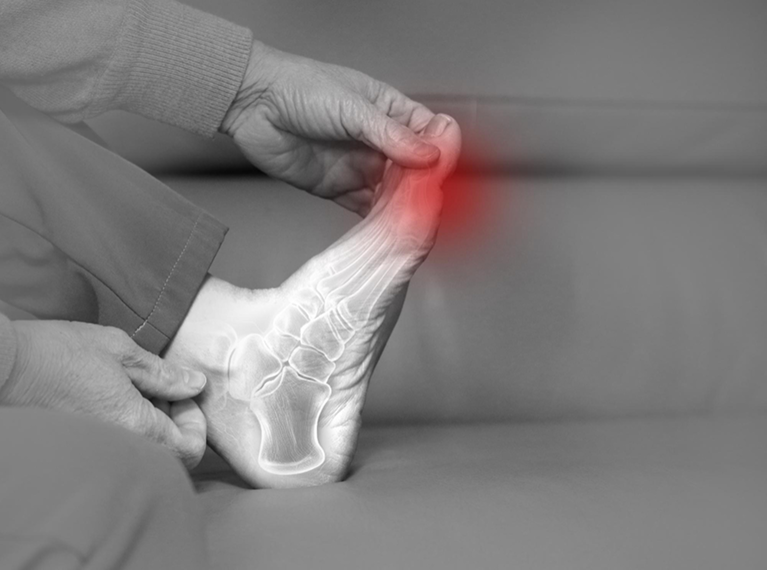
A tight shoe, a high heel, a hard landing after a jump; any of these can set off Morton's neuroma. Most people describe it the same way: like there's a pebble stuck under the ball of the foot that won't shake loose.
Sometimes it's footwear. Other times, it's an existing foot condition, like a bunion or flat feet, quietly shifting extra pressure onto the nerve over time.
Recognizing the Signs
- Pain or pressure at the ball of the foot, often between the third and fourth toes
- A sensation like standing on a pebble or a fold in your sock
- Numbness or a burning feeling that comes and goes
- Discomfort that worsens in tight or narrow shoes
- Pain that eases somewhat when barefoot
- Symptoms that flare up after running, jumping, or long periods on your feet
01
Know the Warning Signs
When It's Time to See a Podiatrist
Mild discomfort that fades after switching shoes usually isn't urgent. But pain that lingers for more than a couple of weeks is a different story.
Numbness that keeps spreading, or pain sharp enough to change how you walk, means it's time to get it checked. Left untreated, irritated nerve tissue tends to worsen rather than improve.
02
Professional Evaluation
Getting the Right Diagnosis
Morton's neuroma can mimic other foot problems, so guessing at the cause often leads to the wrong fix. A podiatrist can usually confirm it through a physical exam, sometimes with imaging to rule out other issues.
Treatment depends on how far along it is. Some cases improve with different shoes and padding. Others need orthotics or further intervention.
03
Take the Next Step
Don't Wait Out Ball-of-Foot Pain
If pain at the ball of your foot isn't going away, don't try to guess your way through it. Andrea Hyperbaric Wound Care and Health Center can evaluate the area and get you on the right treatment path.
Call us today to schedule an evaluation.