






Ankle Sprains
Ankle pain following a sudden twist, fall, or other injury should never be ignored. One of the most frequent causes of this pain is a sprain, which happens when the ligaments holding the ankle together get stretched too far or torn. The severity varies from person to person and injury to injury.
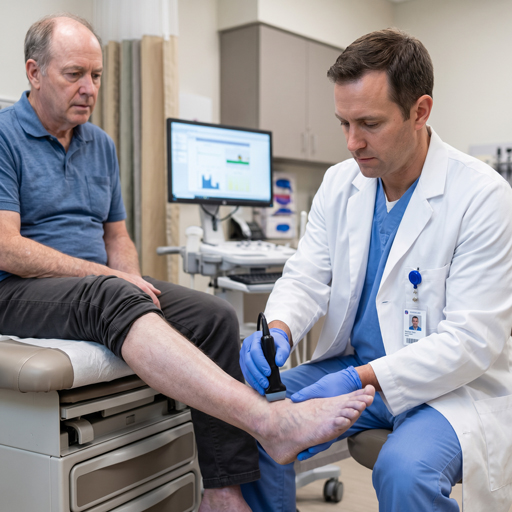
At Andrea Hyperbaric Wound Care and Health Center, we provide comprehensive evaluation and treatment for ankle sprains, creating personalized care plans to relieve pain, promote healing, and restore mobility as safely and efficiently as possible.


Understanding the Different Grades of Ankle Sprains
There are three levels. A mild sprain means the ankle stays stable, but the ligaments have been overstretched.
A moderate sprain involves one or more ligaments partially tearing, with noticeable swelling and limited movement.
A severe sprain is a different situation entirely, with one or more ligaments fully torn, the ankle unstable, and little to no ability to move the foot normally.
Who Gets Ankle Sprains
Athletes tend to deal with ankle sprains more than other people, and the sports involved are usually the ones with quick lateral movements, jumping, or uneven surfaces. Volleyball, basketball, and soccer are among the most common sports. A single awkward landing or unexpected change in direction is all it takes.
That said, ankle sprains can also occur in non-athletes. An uneven sidewalk, a misstep off a curb, or simply losing footing on stairs can lead to the same injury. Age, previous ankle injuries, and poor ankle stability all increase their chances.
Prevention Worth Taking Seriously
Athletes who wrap or compress the ankle before activity have found that it reduces their injury risk. A balance board is another tool worth knowing about. Regular use strengthens the muscles around the ankle and improves stability over time, which makes the joint less vulnerable to the kind of movement that causes sprains.
Other habits that help:
- Warm up properly before any physical activity
- Wear footwear that fits well and supports the ankle
- Strengthen the muscles around the ankle through targeted exercises
- Be cautious on uneven surfaces and unfamiliar terrain
- Avoid returning to full activity too quickly after a previous sprain
Book Your Appointment Today
Home rest and ice can help with mild sprains, but they do not tell you what is actually going on inside the joint.
A proper diagnosis matters because the treatment for a mild sprain looks very different from what a severe tear requires. Returning to activity on an untreated severe sprain often leads to chronic instability and repeated injuries.
At Andrea Hyperbaric Wound Care and Health Center, we evaluate ankle injuries and put together a treatment plan based on what the injury actually is. Call us now to book an appointment.