
HBOT for Gas Gangrene
When Severe Infections Require More Than Standard Care
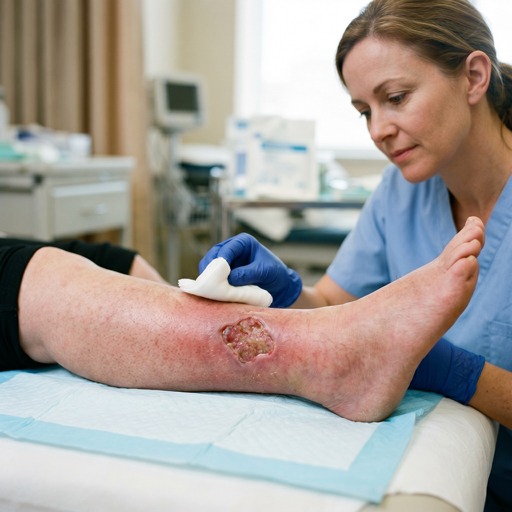
Gas gangrene does not develop slowly. It is a rapidly progressing bacterial infection caused by Clostridium bacteria that invade muscle tissue, produce dangerous toxins, and release gas under the skin as they destroy everything in their path.
High fever, persistent inflammation, severe pain, and blistering are among the first signs, and they tend to worsen quickly. This is a medical emergency. Without aggressive, immediate intervention, gas gangrene can become fatal within hours.
At Andrea Hyperbaric Wound Care and Health Center, Hyperbaric Oxygen Therapy is available as part of the treatment approach for patients with gas gangrene. Used alongside surgery and antibiotics, it helps combat the infection at its source.
Why Gas Gangrene Is Difficult to Treat
The bacteria responsible for gas gangrene thrive in low-oxygen environments. Wounds, surgical sites, and traumatic injuries create exactly the conditions these bacteria need to spread.
Once established, they produce alpha toxins that accelerate tissue destruction and push the infection deeper into the surrounding muscle.
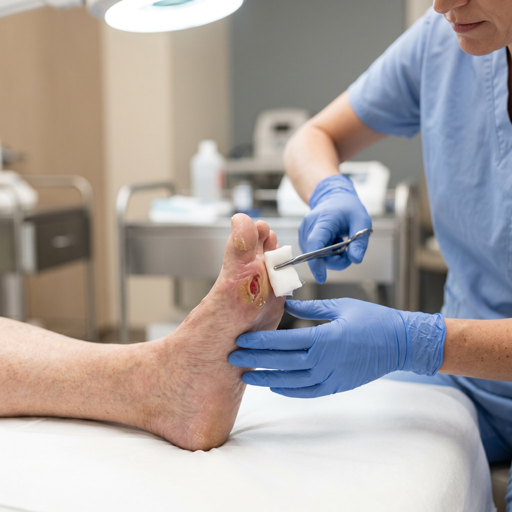
Standard antibiotics and surgery to remove damaged tissue are often the first treatments used, but they may not address every part of the problem. The infected tissue is often poorly oxygenated, which reduces antibiotic effectiveness and allows bacteria to continue spreading even during active treatment.
Common reasons gas gangrene progresses rapidly:
- Clostridium bacteria multiply quickly in oxygen-deprived tissue
- Toxin production damages tissue faster than the immune system can respond
- Gas buildup under the skin signals an active, spreading infection
- Blistering, fever, and swelling worsen rapidly without targeted intervention
What Hyperbaric Oxygen Therapy Does
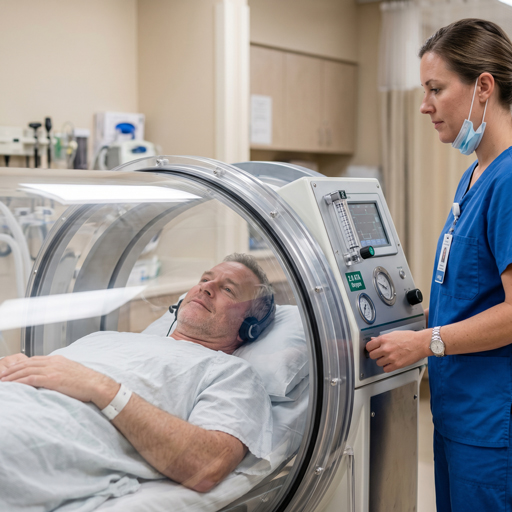
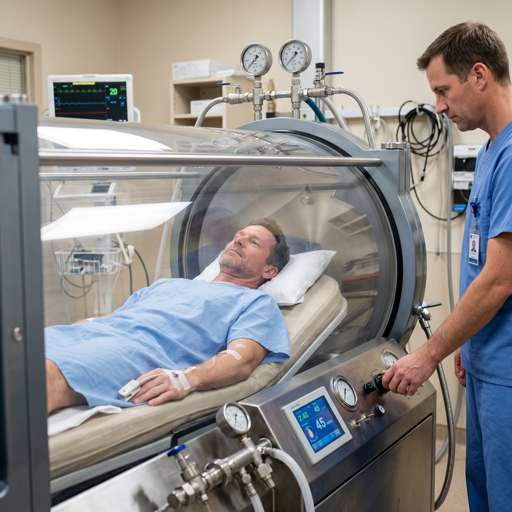
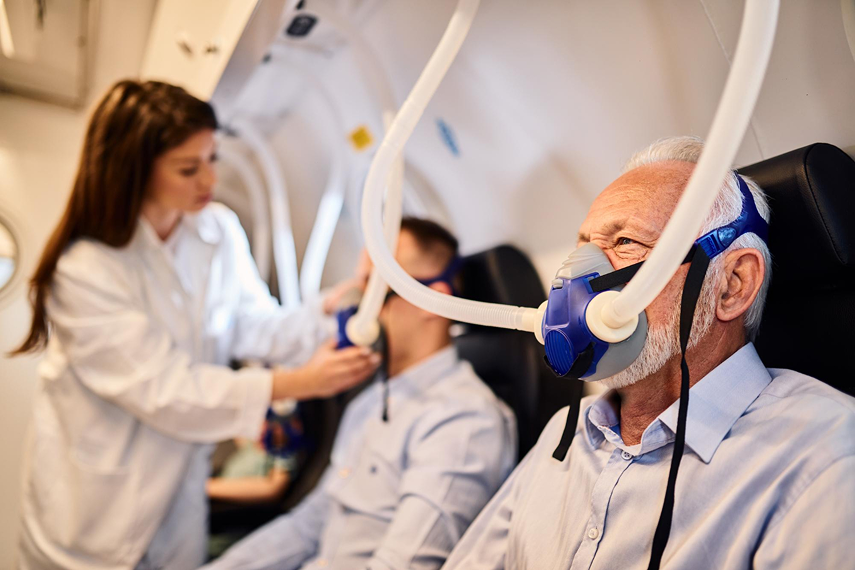
Inside a pressurized hyperbaric chamber, patients breathe 100% pure oxygen at levels far above those delivered by normal breathing.
The increased oxygen content makes it less friendly for Clostridium bacteria and at the same time improves oxygen supply to damaged tissue.
Raising tissue oxygen concentrations greatly reduces the production of bacterial toxins that damage healthy tissue.
What HBOT delivers for gas gangrene:
- Inhibits the growth of Clostridium bacteria and helps limit the spread of infection
- It relieves pain and edema in the diseased tissue
- Prevents toxin formation by flooding tissue with oxygen
- Enhances the efficacy of antibiotic therapy
- Promotes tissue repair and limits the amount of surgical excision
- Stimulates the immune system to combat the illness
HBOT is not a replacement for surgery or antibiotics. It helps provide oxygen to the afflicted tissue and helps the body respond to treatment, in combination with antibiotics and surgery.
Who Benefits Most From This Treatment
Patients who benefit most from HBOT include-
- those with confirmed gas gangrene diagnoses,
- individuals who have undergone surgical debridement and need additional infection control, and
- patients at risk of further tissue loss or amputation without adjunctive therapy.
Coverage through most major health insurers, including Medicare, is available for approved cases.
Do Not Wait on a Gas Gangrene Diagnosis
Prompt treatment is critical for this type of infection. The sooner treatment begins, the better the chances of preserving tissue and preventing complications that become irreversible.
If you or a loved one has been diagnosed with gas gangrene, contact us at Andrea Hyperbaric Wound Care and Health Center today so we can coordinate care with your treating medical team.